

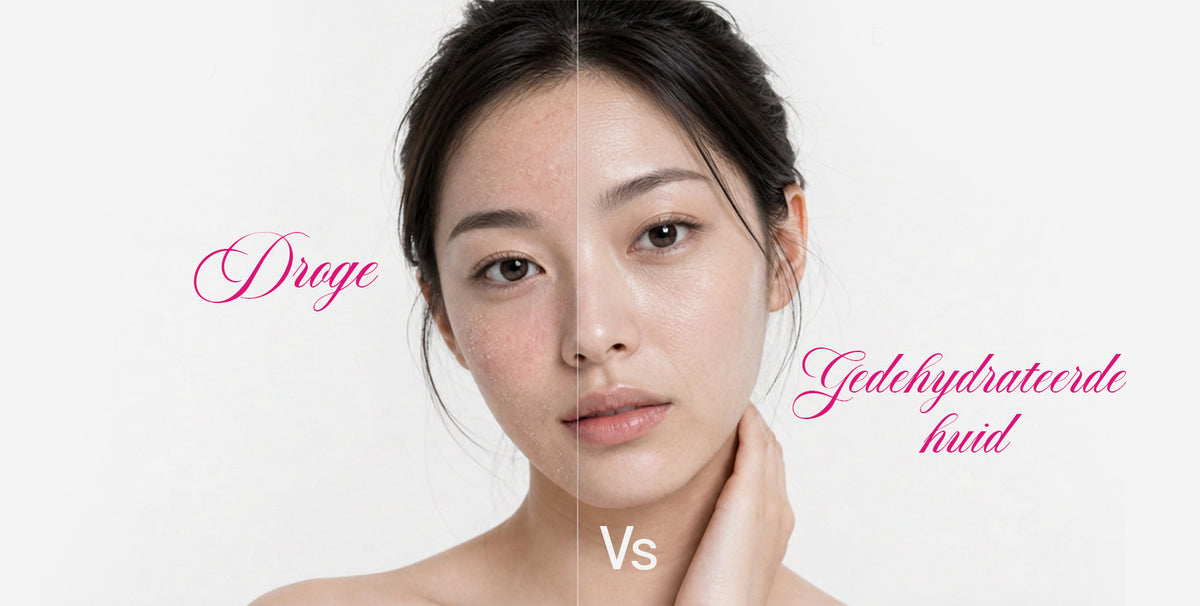
A dry skin and a dehydrated skin can sometimes look very similar. Yet, they are two different things and require different care. Both can cause your skin to feel tight, rough, or uncomfortable, but the cause is different. Dry skin is related to your skin type, while dehydrated skin primarily needs more water.
It is therefore not surprising that these two are often confused with each other. A dull skin, flakes, rough patches, or a tight feeling after cleansing can occur in both. The most important thing is to take a good look at what your skin needs: does it need more oil, more water, or perhaps a combination of both?
Dehydrated skin mainly needs ingredients that attract and help retain water. Dry skin, on the other hand, requires more nourishing products and support for the skin barrier. And don't forget: every skin type can become temporarily dehydrated. So even an oily or combination skin can suffer from a lack of water.
When you know the difference, it becomes easier to choose products that truly suit your skin. You don't have to just add extra steps to your routine. In this guide, you will learn how to recognize the signs, what your skin needs, and which ingredients and products can help make your skin feel comfortable and healthy again.
What is dry skin?
Dry skin is a characteristic of your natural skin type. This means that your skin naturally produces less sebum. Sebum helps keep the skin soft and protects it against moisture loss.
When your skin is dry, you may notice the following:
- Flakes or rough patches
- A tight feeling, especially after cleansing
- A dull or uneven skin texture
- Increased sensitivity or irritation
- Fine lines that are more clearly visible
- A constant need for a richer moisturizer
How dry your skin is can be influenced by various factors. Your genes play a role, but so does the weather and the products you use. Cold air, low humidity, or a cleanser that is too harsh can make your skin feel even drier and more uncomfortable.
With dry skin, it is therefore not just about extra water. Your skin also needs support for the skin barrier. Mild and nourishing care can help to retain moisture better and make your skin feel soft and comfortable.
The CeraVe Hydration Cream for Dry to Very Dry Skin, for example, combines moisture-binding ingredients such as hyaluronic acid and glycerin with ceramides and other ingredients that help support the skin barrier. The cream is specially developed for dry to very dry skin and can help make the skin feel softer and more comfortable.
What is dehydrated skin?
Dehydrated skin is something else. Here, your skin has a temporary shortage of water. Every skin type can experience this. Even an oily or combination skin can sometimes need more hydration.
The difference is simple: dry skin primarily lacks oil, while dehydrated skin lacks water.
Your skin can, for example, feel oily and yet be tight or uncomfortable. The weather, not drinking enough, over-cleansing, or using products that are too harsh can cause your skin to have a greater need for hydration.
Common signs are:
- A tight or uncomfortable feeling
- A dull appearance
- Fine lines that are more clearly visible
- A rough or uneven skin texture
- Skin that feels tight yet becomes oily
- Makeup that becomes patchy or does not sit beautifully and evenly on the skin
That is why a rich cream is not always the best solution for dehydrated skin. Your skin primarily needs ingredients that attract and hold onto water. After that, you can use a moisturizer that helps to lock in this moisture.
Dry vs. dehydrated skin: the quick difference

The simplest way to remember the difference:
Dry skin = too little oil.
Dehydrated skin = too little water.
Dry skin is usually part of your natural skin type. Dehydration is often temporary and can be caused by, for example, the weather, your skincare routine, or other circumstances. When you give your skin the right care, this can improve again.
It is also possible to have both at the same time. A naturally dry skin can also become dehydrated. Your skin may then have a need for both extra water and a nourishing cream that supports the skin barrier.
How do you know which one you have?
Start by paying attention to how your skin behaves. Don't look at just one symptom, but at the whole picture.
Does your skin almost always feel dry, rough, or tight, and does it feel better as soon as you use a richer moisturizer? Then you probably have naturally dry skin.
Does your skin suddenly feel tight or dull, do you see new fine lines, and does your skin feel rougher than normal, while it still becomes oily in some areas? Then your skin may be dehydrated and in need of more water.
Your daily routine can also provide important information. Does your skin feel tight after cleansing? Then your cleanser may be removing too much of your skin's natural protection. Does it feel like your skin absorbs the hydration immediately, but it becomes tight again shortly after? Then it may help not just to add water, but to pay more attention to retaining moisture.
These signs are, of course, not a medical diagnosis. Do you suffer from persistent irritation, severe dryness, or other skin problems? Then it is best to ask for advice from a qualified dermatologist or skincare specialist.
How to hydrate dehydrated skin?
Does your skin feel dehydrated? Start with a simple and mild routine. You don't always need many different products. Sometimes a simple routine works best.
1. Use a mild cleanser
Avoid aggressive cleansing that makes your skin feel tight or "squeaky clean." A good cleanser removes dirt, sebum, and impurities without unnecessarily drying out your skin.
2. Add a hydrating serum
Choose a serum with ingredients such as hyaluronic acid, glycerin, or panthenol. These ingredients help attract and retain water, which can make your skin feel better hydrated.
The CeraVe Hydrating Hyaluronic Acid Serum is available at Aladin Beauty. The formula contains hyaluronic acid, ceramides, and vitamin B5 (panthenol) and is suitable for dry, dehydrated, sensitive, and combination skin.
Also in the hyaluronic acid serum collection at Aladin Beauty, you will find K-Beauty options such as COSRX Hyaluronic Hydra Power Essence and COSRX The Hyaluronic Acid 3 Serum.
3. Use a moisturizer afterwards
Hydration works best when you follow up with a moisturizer. This helps support your skin barrier and can help to keep the moisture in your skin for longer.
The Tocobo Multi Ceramide Cream combines multiple ceramides with hyaluronic acid and panthenol. According to the product information, the cream is developed for skin issues such as dehydration, dryness, rough skin texture, and a weakened skin barrier.
For a product that focuses primarily on hydration, the Medicube PDRN Pink Hyaluronic Moisturising Cream is another option available at Aladin Beauty. The light texture provides intensive hydration and supports the skin barrier.
4. Don't forget SPF
Make sun protection the last step of your morning skincare routine. Daily protection against the sun helps keep your skin healthy and protects against UV damage. This way, you provide your skin with not only hydration but also the daily protection it needs. Learn How to Choose the Right SPF for Your Skin Type.
How to care for dry skin?
Is your skin naturally dry? Then hydration is still important. But in addition, your skin also needs richer care and support for the skin barrier.
A good routine contains a combination of humectants, emollients, and occlusive ingredients. Humectants such as hyaluronic acid and glycerin help attract water. Richer moisturizers and ingredients that support the skin barrier subsequently help to keep your skin soft, comfortable, and protected.
Aladin Beauty also has CeraVe Hydrating Milk for dry, dehydrated, or sensitive skin. This light lotion combines ceramides and hyaluronic acid.
Can you have dry and dehydrated skin at the same time?
Absolutely.
This is where the difference between the two becomes extra important. You can have a naturally dry skin and simultaneously suffer from dehydration. This can, for example, be caused by the weather, your cleansing habits, the environment, or a skincare routine that does not properly suit your skin.
Try not to add too many extra products all at once in such moments. Focus first on sufficient hydration, a good moisturizer, and supporting your skin barrier. Also, carefully avoid products or habits that could cause your skin to lose even more moisture.
Read also: The Era of 15 Steps is Over: Why a Minimalist Skincare Routine Can Be Better For Your Skin Barrier
In summary
A dry and a dehydrated skin can look the same, but do not require exactly the same care. Dry skin mainly needs oil, nourishing ingredients, and support for the skin barrier. Dehydrated skin primarily needs more water and ingredients that help to retain this moisture.
The good news? Your skincare routine doesn't have to be complicated. Pay attention to what your skin is telling you, choose products that fit your skin's needs, and regularly give it the mild care it requires.
At Aladin Beauty, you will find skincare from CeraVe, COSRX, Tocobo, and Medicube. With these, you can assemble a routine that fits your skin type and your skin's needs.
Shop Hydrating Skincare at Aladin Beauty!
Frequently Asked Questions
Is dry skin the same as dehydrated skin?
No. Dry skin is a skin type that involves a lack of oil. Dehydrated skin is a temporary skin condition where the skin contains too little water. It is also possible to have both dry and dehydrated skin at the same time.
Can oily skin be dehydrated?
Yes. Oily skin does not automatically mean your skin is sufficiently hydrated. Does your skin feel tight or dull during the day, but at the same time becomes oily? Then dehydration could be a possible cause.
How do I know if my skin is dehydrated?
Common signs include a tight feeling, a dull appearance, a rough skin texture, and fine lines that are more clearly visible than normal. Your skin may, for example, feel tight after cleansing while still producing plenty of sebum.
Which ingredients help with dehydrated skin?
Look primarily for ingredients such as hyaluronic acid, glycerin, and panthenol. These can help to attract and retain water. Use a moisturizer afterwards to support your skin barrier and help limit moisture loss.
What is best for dry skin?
Dry skin usually benefits from both hydration and richer care. Look for hydrating ingredients like hyaluronic acid and glycerin and combine these with ceramides and other ingredients that support the skin barrier. This helps keep your skin soft and comfortable.
Can I have dry and dehydrated skin at the same time?
Yes. Your skin can be naturally dry and simultaneously become temporarily dehydrated. This can happen, for example, due to the weather, your cleansing habits, the environment, or certain skincare products. In that case, focus on both hydration and supporting your skin barrier.
Should I use a moisturizer if my skin is dehydrated?
Yes. A hydrating serum helps to add water to your skin, while a moisturizer supports the skin barrier and can help reduce moisture loss. By using both, you provide your skin with more complete care.
How long does it take for dehydrated skin to improve?
This varies per person and depends on the cause of the dehydration. A mild cleanser, sufficient hydration, and regular use of a moisturizer can help your skin gradually feel more comfortable and better hydrated.


